With it being Road Safety Week we thought we would feature the very latest technology in prescription driving lenses
Those driving for long periods, especially at night time, may feel visually insecure due to the reduction of their visual capacity. Night myopia is a phenomenon that affects one out of three drivers. It causes a loss of their ability to focus on distant objects at night.
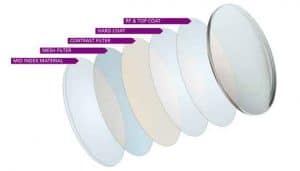
Now there is a new technology called Vista Mesh that can help drivers with night time focus and the glare coming from oncoming super bright headlights. It gets better because the very same lens is also perfect for computer use, so they have a dual function.
AFAR-SV Prescription driving lenses… can be further combined with Vista-Mesh lens material for outstanding night driving performance. AFAR-SV has a specific night vision zone in the upper part of the lens that helps compensate for the refractive error difference that occurs between day and night by up to 0.25D. This provides the wearer with superior visual acuity, reducing stress and visual fatigue so common when driving at night. Not to be underestimated, AFAR-SV design incorporates Norton-SV Digital HD design, providing extremely good visual quality at every point on the lens from the center to edge, regardless of the prescription or frame selected.
Vista Mesh is the ideal glare stopping night driving lens. Perfect for working at a computer screen or looking at a tablet or mobile phone. Vista Mesh helps with Eye strain, office lighting, clinical afflictions, a range of digital devices, and general reading and writing.
Yes, we offer Vista Mesh in prescription, we need only a copy of your latest eye test. Your PD (pupil distance) and we need to know if you require just a conrection to your distance or if you require Vari-Focals
What we consider to be bright white light in our homes, supermarkets, offices and car head lights, acctually contains a lot of blue. Too much exposure to blue light at night suppresses the secretion of melatonin, a hormone that regulates sleep cycles. … As scientists learn more about potential problems of blue light, blue light blocking glasses have gained popularity as a way to subdue digital eye strain and avoid disrupted sleep cycle.
These glasses can let more light in and also help to reduce glare from oncoming traffic and other light sources. … While often marketed specifically for night driving, polarized or UV (ultraviolet) lens glasses can actually be hazardous when used at night, as they can block too much light coming in
Yellow lenses will enhance vision on flat low light days. Once the natural light as gone they are no longer effective. Most common yellow lenses are catergory 1 stopping upto 20% of light. Any lens that reduces the amount of light that passes through it at night time, is a bad idea.
“Yellow ‘Night Driving‘ lenses have been shown to provide no benefit in seeing ability at night. They are even hazardous, because they give the driver a feeling of seeing better, which no one has yet been able to explain. Studies have shown that they actually impair visual performance and retard glare recovery.
That said Yellow lenses have their place, great for sports, forensic science and seasonal affective disorder.
Although grey and green lenses have their own benefits, and colourful lenses are fun, brown’s and amber tints increase contrast and is a nice warm colour. If you are buying sunglasses consider polarised lenses to stop glare.